Where Robots Learn to Fly, Dive and Think
Inside CMU’s Robotics Innovation Center
SHERI HALL
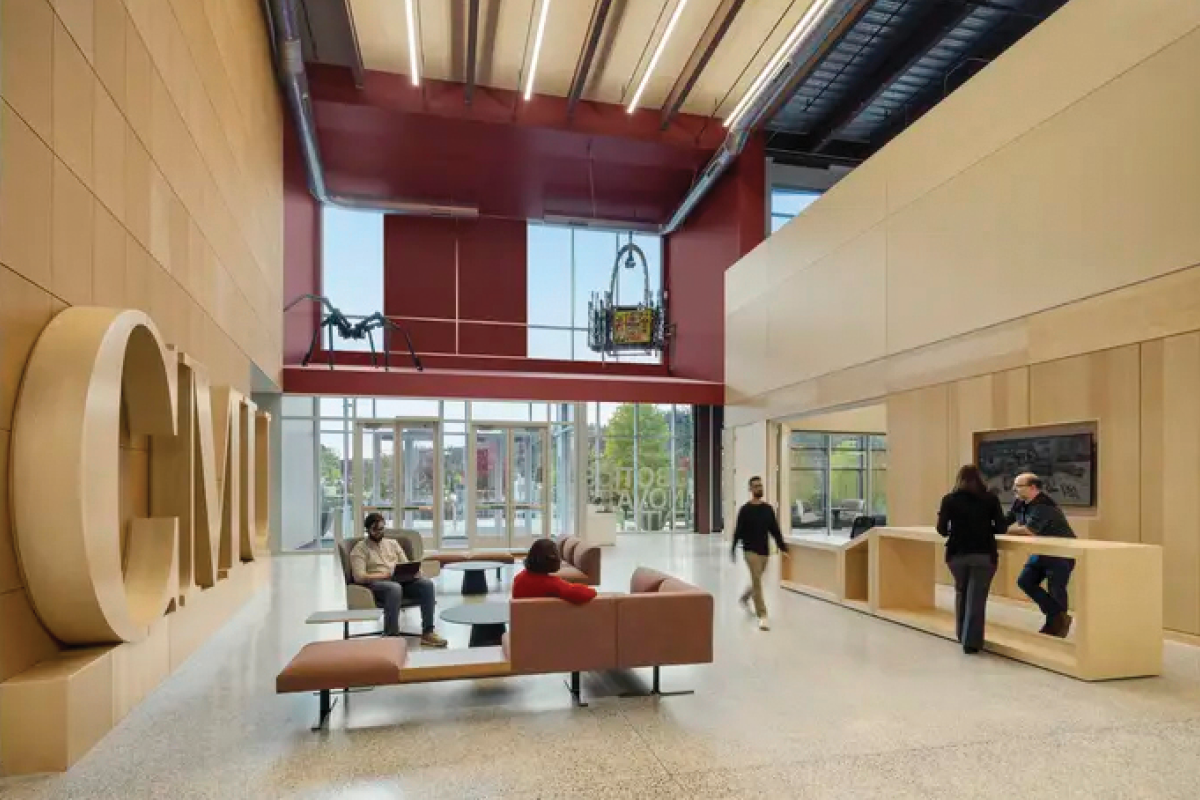
Situated on the banks of the Monongahela River in Pittsburgh’s Hazelwood neighborhood, CMU’s new Robotics Innovation Center rises as a 150,000-square-foot testament to the university’s robotics legacy and its commitment to innovation.
When Pennsylvania Governor Josh Shapiro helped cut the ribbon on the facility in February, he wasn’t just opening another building — he was launching what may be the most consequential robotics proving grounds in the world. Inside, more than 50 labs and working groups will chase breakthroughs that will reshape how robots operate on land, underground, in the air and deep beneath the water’s surface.
The Robotics Innovation Center — or the RIC, as researchers have taken to calling it — was designed to connect research with commercial ventures by housing university teams next to industry partners.
The facility complements the work of CMU’s National Robotics Engineering Center, the world’s largest robotics research and development organization. And it’s situated next to Mill 19, the 265,000-square-foot manufacturing research hub that is home to CMU’s Manufacturing Futures Institute and the Catalyst Connection workforce training center. Next door, the University of Pittsburgh is building BioForge, a $250 million facility focused on breakthroughs in biomanufacturing. Taken together, Hazelwood Green is a haven for groundbreaking, multidisciplinary research.
With its unique location and high-tech infrastructure, the RIC has been engineered to showcase innovation, inspire future generations and highlight how CMU contributes to the greater Pittsburgh community and the ever-evolving innovation economy.
“The Robotics Innovation Center offers Carnegie Mellon researchers new opportunities to develop and test robotics, automation and physical AI in the real world,” said Martial Hebert, dean and University Professor of Robotics in the School of Computer Science. “Scientists from across the university will tackle challenges ranging from agriculture and manufacturing to search and rescue and exploration. A new generation of world-changing research will happen inside the RIC.”
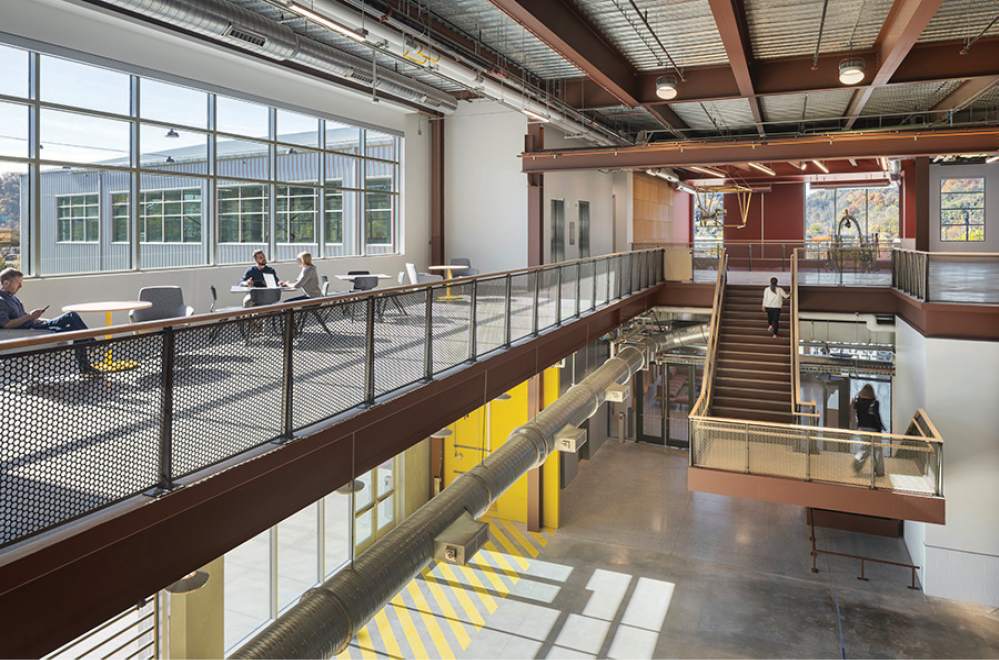
An artist’s rendering of the interior of the Robotics Innovation Center.
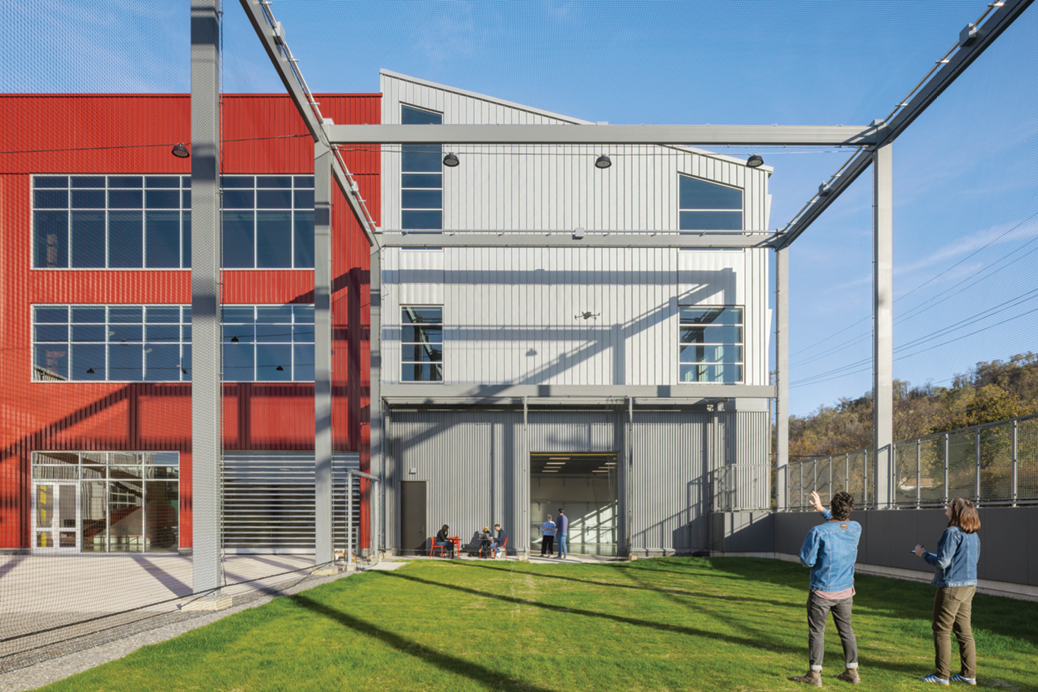
Two students fly a drone in the RIC’s exterior drone cage.
To date, several research companies and projects have already moved in. The largest is FieldAI, an industry leader known for developing autonomous robots that work in unstructured environments.
Professor in the Robotics Institute Michael Kaess works at the RIC and has launched Aquatonomy, a startup developing robots for underwater inspection.
SteelEagle — a research project run by Mahadev Satyanarayanan, the Jaime Carbonell University Professor of Computer Science — uses the RIC as its testing ground. The project is developing software that can transform commercial drones into fully autonomous flying vehicles.
Most recently, Fujitsu Limited, a Japanese technology company, announced a partnership with CMU to create a new Physical AI Research Center at the RIC. CMU researchers will work alongside Fujitsu scientists, engineers and technicians to develop physical AI systems designed to tackle real-world challenges.

David Lindlbauer, Assistant Professor in CMU’s Human-Computer Interaction Institute
“The RIC and its resources serve as a hotbed for innovation,” said David Lindlbauer, an assistant professor in CMU’s Human-Computer Interaction Institute, who has a joint research project with Fujitsu on human behavior simulation for robotics. “Researchers from CMU and from industry will work side by side to tackle hard and impactful problems, from understanding human behavior to developing novel interactive systems and advanced spatial robotics. Fujitsu’s expanded presence and research will undoubtedly lead to interesting new synergies and expand the collaboration portfolio into new and exciting areas.”
A Front Row Seat to Commercialization
The vision of co-locating researchers and industry professionals became a reality in February when FieldAI became the RIC’s inaugural corporate tenant.
The company is valued at $2 billion and includes more than 200 employees in the U.S. Its robots are deployed in eight different industries, including construction, energy, manufacturing, logistics and security.

Sebastian Scherer, Associate Research Professor in the RI
Based in California, FieldAI was founded by a team from NASA’s Jet Propulsion Laboratory. Globally renowned robotics expert Sebastian Scherer, research professor in the Robotics Institute, is a director at FieldAI and manager of the Pittsburgh offices, which will house 10 employees.
Locating a thriving company next to university researchers will help students understand what it takes to bring discoveries to market, Scherer said.
“Bringing FieldAI to the RIC creates a unique cooperation between academic discovery and real-world deployment,” he said.
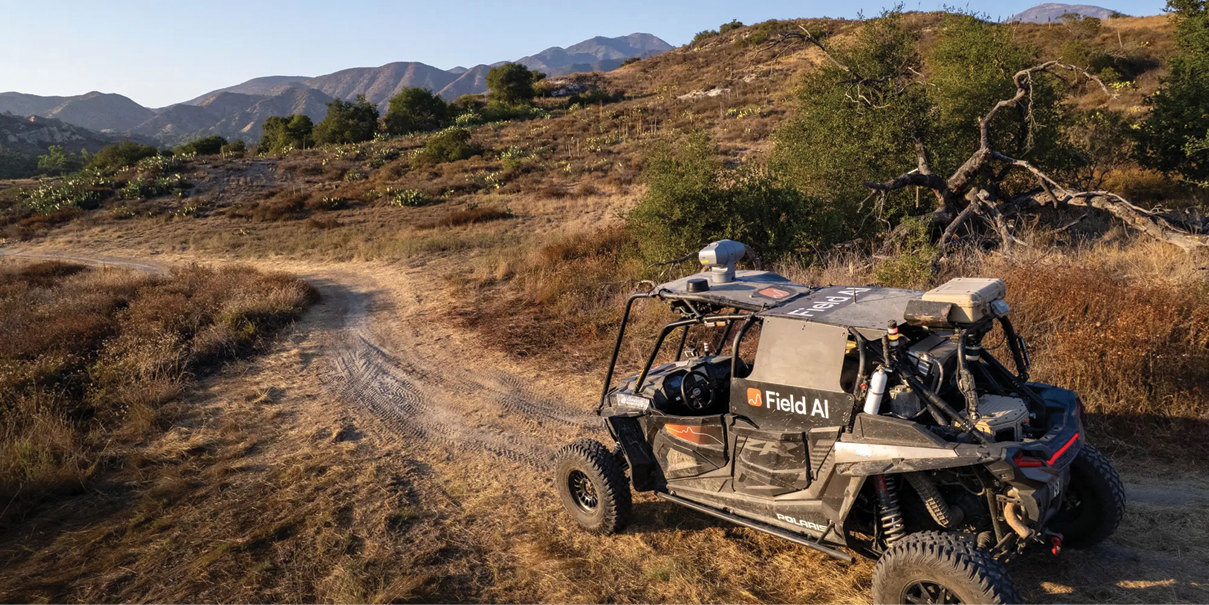
A FieldAI self driving vehicle traverses a dirt road in California.
“CMU researchers and students will have a front-row seat to the engineering challenges of scaling AI for the field and will see what it takes to make the technology work in demanding scenarios. With FieldAI in the building, we can see exactly how our foundational research translates into commercial applications and uncover new directions for our work in the lab.”
The RIC also offers significant advantages to FieldAI. Because the company is putting robots into unstructured work environments, they need to test the robots in a wide variety of interactions. The RIC provides those opportunities.
The facility boasts of a 50,000-square-foot indoor robot testing floor and a 1.5-acre outdoor testing area. Additionally, earlier this year, CMU partnered with OptiTrack, the world’s largest motion capture provider and a pioneer in precision 3D tracking technology. OptiTrack equips the RIC with advanced motion capture systems in an indoor studio and the outdoor drone cage.
The motion system can track motion up to a sub-millimeter precision with infrared dots, which allows FieldAI to map and recreate human motion, said Scherer.
“FieldAI uses a mix of traditional methods and the latest learning-based methods that leverage our own data to model different scenarios,” Scherer said. “We have to push the envelope to improve the system.”
Deepening Underwater Boundaries
In addition to indoor and outdoor simulation spaces, the RIC offers a quieter but equally profound aquatic testing ground.
A specially designed 75,000-gallon water tank allows researchers, including Kaess, to test autonomous underwater vehicles, or AUVs. The tank is 10 feet deep and painted black to simulate the darkness found deep under water. Its concrete walls are engineered to absorb sonar acoustics rather than reflect them.

Michael Kaess, Professor
in the Robotics Institute
“The water tank enables us to pursue new projects that will put us on the map for underwater research,” Kaess explained. “It’s much more difficult to do experiments with underwater robots rather than flying or driving because it’s difficult to get a chunk of ocean into the lab.”
A team of undergraduate robotics and engineering students — the TartanAUV group — also uses the RIC’s water tank for development. The team takes part in the annual RoboSub competition sponsored by the U.S. Office of Naval Research.
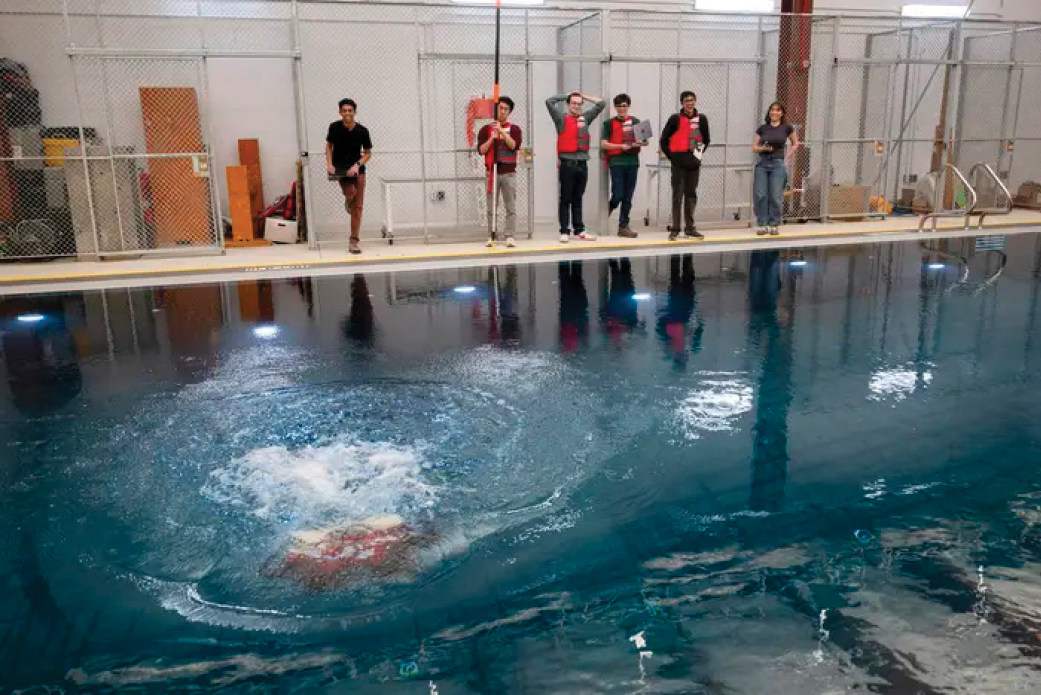
Six students stand at the edge of the RIC’s water tank operating an underwater robot.
Kaess’ lab is working to build AUVs that can create 3D maps of underwater surfaces and inspect underwater infrastructure such as dams, bridge pilings and locks, and commercializing that work in a startup called Aquatonomy. His research is funded by the U.S. Navy and Army, the National Science Foundation, and the Department of Energy, among others.
Working underwater presents unique challenges. GPS doesn’t work because radio waves don’t propagate underwater. It can be difficult to keep a vehicle steady in moving currents, and it’s hard to create maps and assess structures in low-to-zero visibility.
To overcome these challenges, Kaess’ AUVs use acoustic sensors, odometry, inertial sensors and Doppler velocity sensors. Computer algorithms combine data from these sensors to allow the AUVs to function. The AUVs could reduce human divers’ exposure to dangerous conditions, especially with low visibility or extreme cold temperatures.
While it may not seem obvious at first, Pittsburgh is actually an ideal location to start an underwater robotics company, Kaess explained.
“Pittsburgh may not be considered a likely place for underwater research, but 10% of the nation’s locks are in the Pittsburgh region,” he said. “With the waterways here, we are ideally located for this type of research.”
Off-The-Shelf to Autonomous
Another tenant of the RIC is SteelEagle, a project from CMU’s Living Edge Lab that is rewriting the rules of how we use off-the-shelf drones.
The project offers software that transforms lightweight commercial drones into fully autonomous flying vehicles capable of powerful AI, allowing users to conduct complex search and inspection operations without the complications of a pilot or aircraft hardware.
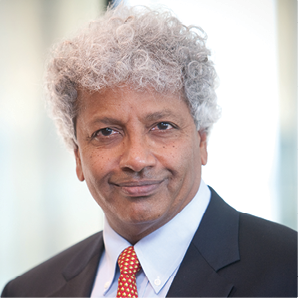
Mahadev Satyanarayanan, Jaime Carbonell University Professor of Computer Science, and Founder of SteelEagle
SteelEagle’s secret is moving the heavy computational work from the drone to ground-based hot spots called cloudlets, which enable the drone to access real-time AI computations faster and more accurately than operating AI solely on board the drone. Because the cloudlet is closer than a distant computing cloud, there is a much smaller network delay. This system allows the drones to avoid obstacles, search, track and navigate independently. If wireless connectivity between drone and cloudlet is disrupted, the drone can continue its mission using its onboard AI until wireless connectivity is restored.
The project is five years in the making.
“We’re trying to democratize the use of drones by making them safer and not requiring a highly trained pilot to fly them,” explained Mahadev Satyanarayanan, founder of SteelEagle.
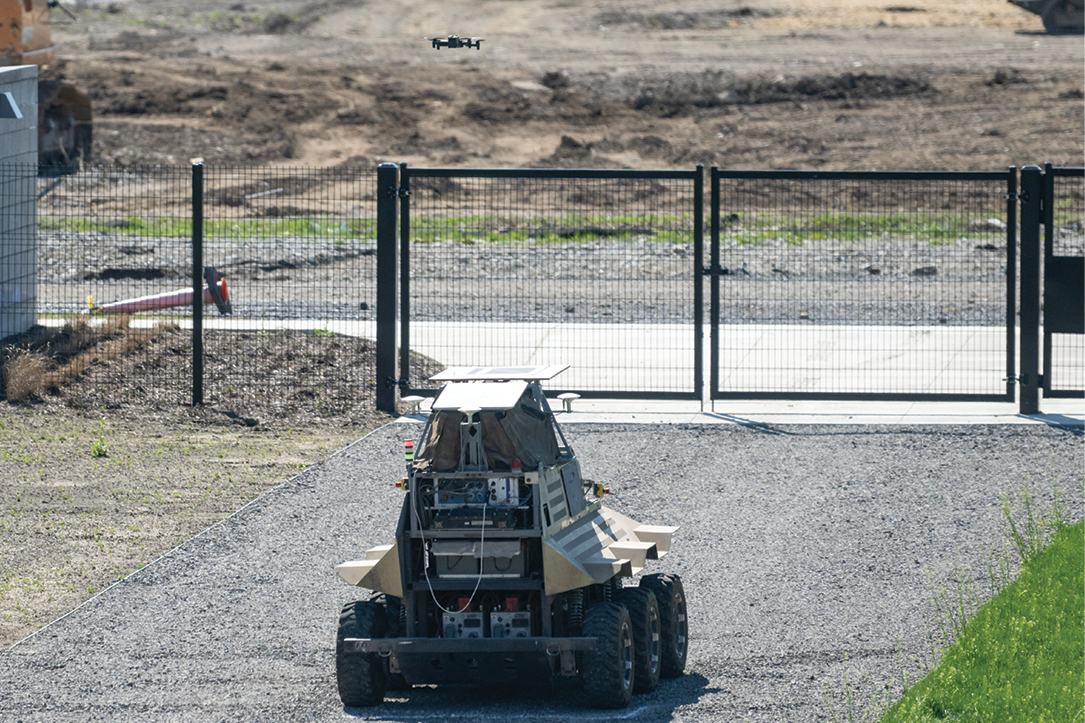
A small drone takes off from the top of a six-wheeled terrain robot.
The practical applications are far-reaching, Satyanarayanan explained. “The drones can inspect roofs, bridges, forest canopies and waterways. They can survey disaster areas when hurricanes or earthquakes make it difficult to travel over land. And they can be used to aid search and rescue workers who are looking for victims.”
As an example, wilderness rescue teams could provide an autonomous drone powered by SteelEagle with an area from Google Maps to search. The drone would have the capability to look for a human, then send back location coordinates and a video of the person.
The RIC offers a tremendous advantage to SteelEagle because its offices are located next to the drone test cage — a huge outdoor room with sides made of netting.
“These facilities have led to a huge increase in our productivity, and they are a big part of what makes the RIC so valuable,” Satyanarayanan said.
The shared facilities promote synergies and partnerships among drone researchers.
“We all collaborate a lot,” Satyanarayanan said. “Any companies that wish to take advantage of
our research can benefit from this proximity.” ■
More from the Fall 2026 LINK Issue
How Privacy Engineering is Shaping the Age of AI